

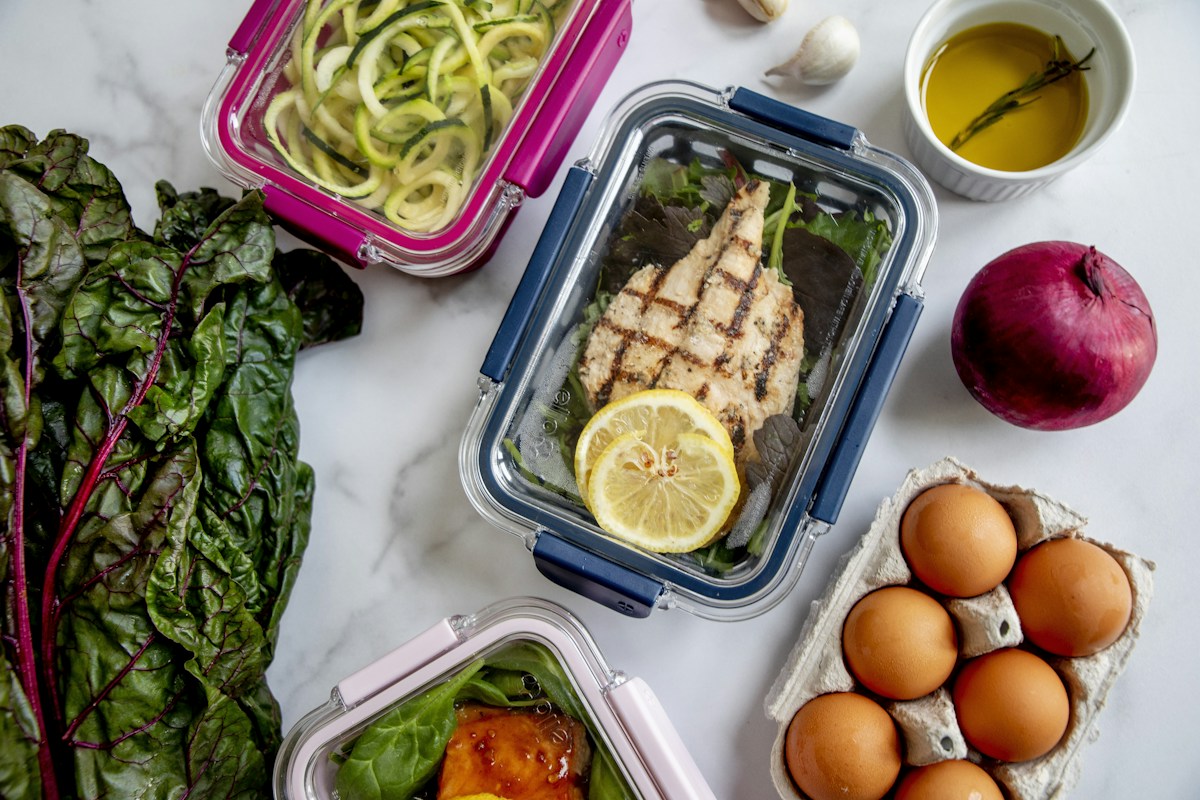
Most food that ends up in the bin does not go off because it was forgotten. It goes off because it was stored with a pocket of air sitting on top of it. Half a lasagne, a wedge of cheese, a bunch of herbs or a bowl of cut fruit all start to dry out, discolour and pick up fridge smells the moment the lid goes on, because an ordinary lid traps the air rather than removing it. Vacuum food storage containers take that air out, and the difference shows up a few days later when the leftovers still look like something you want to eat.
How Vacuum Storage Works, Step by Step
The idea is simple, and the routine takes less than a minute once it becomes habit.
- Fill the container or bag. Let hot food cool first, and leave a little space below the rim so the seal sits flat.
- Close the lid or the bag. Each one has a small silicone valve built in, which is where the air comes out.
- Remove the air. Fit a pump over the valve. A manual pump takes seven to ten strokes; an electric one does it at the press of a button and stops on its own.
- Store it. In vacuum mode the seal is completely airtight, so liquids stay put even in a crowded fridge.
- Open it. Release the valve, the lid lifts off easily, and the food is ready to serve or reheat.
Removing the air slows the deterioration that makes food lose its flavour and texture, which is the whole point. It does not replace cooking food properly or keeping the fridge cold, but it gives everything already in there a longer, better life.
Containers or Bags
A complete system uses both, because they solve different problems.
| Vacuum containers | Reusable vacuum bags | |
|---|---|---|
| Best for | Soups, sauces, stews, cut fruit, soft food that would crush | Cheese, cured meats, bread, portions for the freezer |
| Shape | Rigid, stackable, shallow or deep | Flexible, flattens to save space |
| Microwave | Yes, with the lid removed | Yes |
| Freezer | Fridge use is the main job | Yes |
| Cleaning | Dishwasher safe | Wash and reuse, with a date label to write on |
If most of what you throw away is wet or soft, start with containers. If it is mainly cheese, bread and batch-cooked portions, bags will do more of the work.
Manual or Electric Pump
The pump is the piece people overthink. Two questions settle it.
- How often will you use it? Once or twice a day, every day, and an electric pump that stops automatically when the vacuum is complete is the one you will keep reaching for.
- Will it leave the house? A manual pump is small enough for a cutlery drawer, a lunch bag or a suitcase, and needs no charging.
Plenty of households end up with both: the electric one by the fridge and the manual one in the picnic bag.
Five Pieces Worth Knowing
Every item below works with the same valves, so a starter set can grow piece by piece into a full vacuum storage set.
Vacuum Storage Set Save It Premium
Best for: a household starting from scratch. Four containers from 750 cc up to 1900 cc, a cordless electric pump and five reusable bags. It covers almost every job in the table above on day one, and the larger containers are big enough for a whole tray of leftovers.
Set of 2 Vacuum Containers + Pump + Bags
Best for: a smaller kitchen or a trial run. A 450 cc and a 975 cc container with the same cordless pump and a pair of bag sizes. It is enough to find out how much of your weekly waste disappears before committing to more.
Deep Vacuum Container
Best for: soups, stews and sauces. Square and stackable, in three sizes from 750 cc to 2800 cc, with an opaline white body and a white lid. The deep profile suits anything liquid, and the airtight seal means no drips on the shelf below.
Electric and Cordless Vacuum Pump
Best for: daily use. It charges by USB like a phone, has a flat-battery warning light, runs quietly and stops itself once the vacuum is complete. Bag clips and a liquid-absorption compartment are built in, which helps with anything juicy.
Kit of 5 Reusable Vacuum Bags
Best for: the freezer and the cheese drawer. Two small, two large and one extra-large bag, each with its own valve and a date-label panel. They go in the fridge, freezer and microwave, and the extra-large one is sized for larger cuts or a whole loaf.
Quick Tips
- Write the date on every bag so you always know how long something has been stored.
- Store containers with the valve facing up so you can check the seal at a glance.
- Keep the most-used sizes at the front of the fridge and stack the rest in a cupboard.
- Re-pump after opening and closing; the seal only works while the air is out.
The Takeaway
Vacuum storage is less about gadgets than about one habit: taking the air out before the food goes in the fridge. Start with the kind of food you throw away most, choose containers or bags to match, and add a pump that suits how often you will use it. Within a couple of weeks the bin gets lighter, and the reusable vacuum bags and containers pay their way in food you actually eat.
The Save-It vacuum system described here is designed and sold by Guzzini, alongside the rest of its kitchen range. For more ideas on keeping a well-run kitchen, browse the latest posts on BlogsBuddy.