

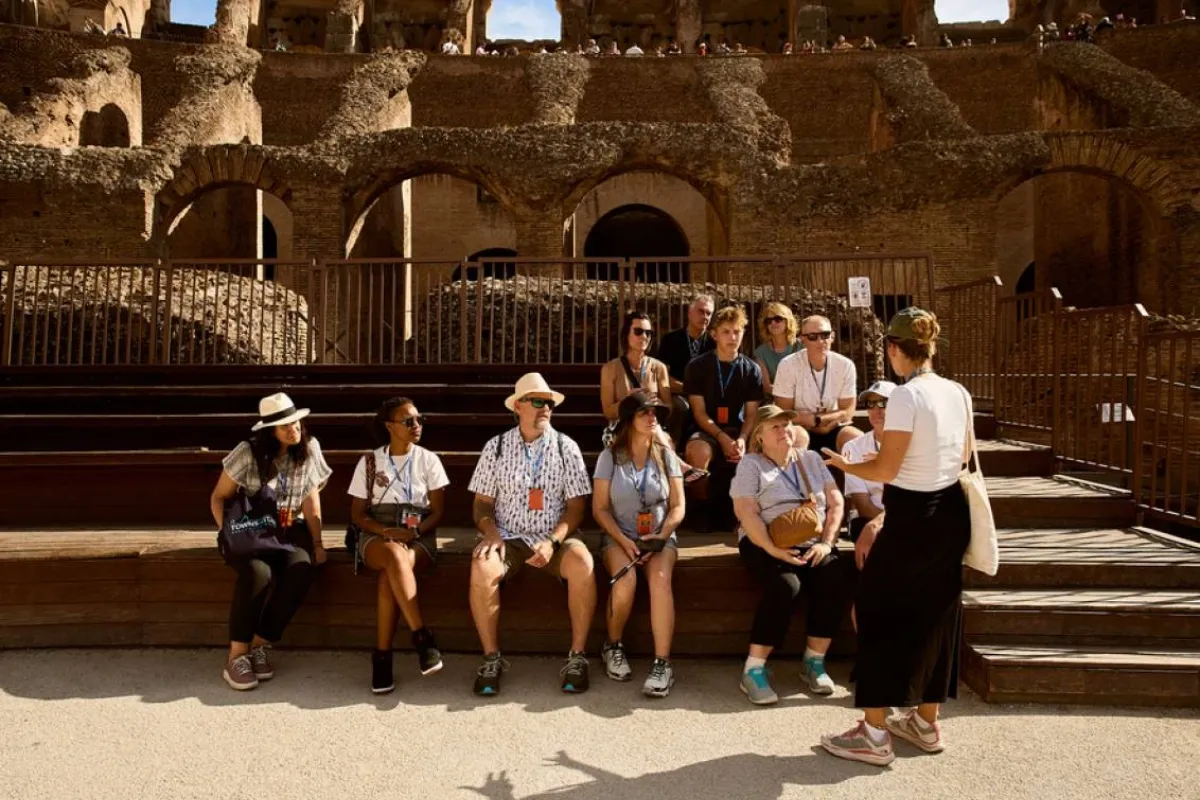
There’s a moment that happens to almost everyone the first time they stand in Rome. You round a corner, perhaps in search of gelato or a peaceful cafe, and when you look, you bang against an old wreck as old as your whole nation. Rome doesn’t ease you in. It leaves centuries at thy feet and challenges thee to understand them. This is precisely the reason why Rome guided tours are important. They do not simply present you with stones; they assist you in listening to echoes.
Yep, I have been walking around Rome alone; I have lost my way more times than I can tell, and, yes, I have been led around by a guide carrying a flag. And honestly? A few of my most colourful memories were Rome guided tours, where history seemed as living, dirty, and human, not like a dusty book.
Why Rome Guided Tours Change the Way You See Rome
Rome is layered. Literally. Below churches, below piazzas, below all, there are ruins, beneath stories. It is easy to overlook what you are looking at without any context. Rome guided tours fill that disconnect between what was old and what was the world.
The most superior Rome historical tours are not in a hurry. They pause. They inform you of why an emperor is a dreadful fool or how ordinary Romans used to live, love and grumble, just like us. All of a sudden, ruins become something personal.
Experiencing the Colosseum Beyond the Surface
Let’s start with the obvious. The Colosseum. You have read about the photographs, and nothing prepares you to enter it. It is not merely a large arena, the place of Rome guided tours, but a political theatre, a spectacle, and even inhumane. Guides describe the actions of crowds, the way games were financed and why this building continues to characterise Rome.
The Colosseum is often included in many an ancient Rome tour in conjunction with the Roman Forum as the area in which the gears turn. The Forum is not merely heaps of ruins here and there; it is the heart of public life of antiquity. You can just about hear the debates being carried on with the help of the right guide.
The Roman Forum and Palatine Hill: Stories Between Stones
The Forum is overwhelming on its own as well. Columns there, arches here, and no explanation at all why it was important. That is what Rome guided tours excel at. They make meaning out of anarchy.
You will read of backstabbing, rule-taking and routine. The Palatine Hill, which is usually part of Rome tours, is a great place to have a wide view of the city and have time to relax as you think of the fact that ancient Rome was so ambitious.
Vatican and Beyond: History With Layers of Faith
Although technically it is the city within a city, the Vatican cannot be mentioned without the story of Rome. Other Rome guided tours are very popular, especially the ones that cover the way in which pagan Rome gradually became Christian Rome. It is intriguing, even conflicting, and in any case captivating.
These historic tours in Rome do not hold the tension back. They elaborate on the reasons why temples transformed into churches and how art grew with faith. It is not so much about religion but mankind’s attempts to comprehend power and faith.
Lesser-Known Ruins That Deserve the Spotlight
This is where the best guided tours in Rome can actually come as a great surprise. In addition to the headline locations, there are underground basilicas, ancient apartments and concealed ruins that are under the streets. Spots that you would pass without noticing.
During more intimate Rome landmark tours, guides give local legends, weird finds and scenes never to be captured in mainstream guidebooks. It is as if it is a secret one is being told.
Evening Tours and After-Hours Magic
Rome changes at night. The crowds become sparse, the lights become gentle, and the ruins are almost dramatic. Some nighttime Rome guided tours, particularly of the Colosseum or less popular archaeological locations.
These Rome sightseeing tours are not so much about sightseeing but more about storytelling. The urban breath is expelled, and all of a sudden history gets nearer, more personal. This is where Rome comes out as a winner in case you are atmosphere lovers.
What Makes Rome Guided Tours Truly Great?
Tours are not all created equal. The best Rome guided tours are conducted by individuals who are passionately fond of this city, who debate over emperors as though they are long-time friends and who make jabs at Roman politics that still seem intimately familiar to this day.
There is no question-hiding on great ancient Rome tours. They admit uncertainty. They do not go pretending that history is clean. And that honesty? It’s refreshing.
Choosing the Right Tour for You
You should inquire about your preference of travelling. Slow and reflective? Vitalising and full of information? All styles of Rome guided tours exist. Others put much emphasis on archaeology, others on tales and atmospheres.
The advantage of the best guided tours in Rome is that they will make you use your time well. Rome is not going, but your visit has ended. An effective leader is making each hour count.
When Rome Stops Feeling Like a Museum
I can only describe Rome guided tours in the best possible way, that is, they make the city come alive once more. Ruins are no longer viewed as fragments but rather as the survivors. You see, Rome is not still in the olden days – it is dragging the olden days with it, day after day.
And that is when the city really gets to you.
Final Thoughts
Rome does not show itself immediately. It murmurs, reasons, laughs, and even overpowers. However, once directed to do so, those old ruins cease to be a source of fright and begin to feel familiar. When you desire that more intimate feeling when history is human and personal, then Rome guided tours that are well organised and focused can make all the difference. Such sites as Viator assist tourists to discover an experience that will transform wandering into knowing and sightseeing into something you will continue thinking about even after you have left Rome.
For more travel inspiration, city guides, and practical tips to plan unforgettable journeys, visit BlogsBuddy.