
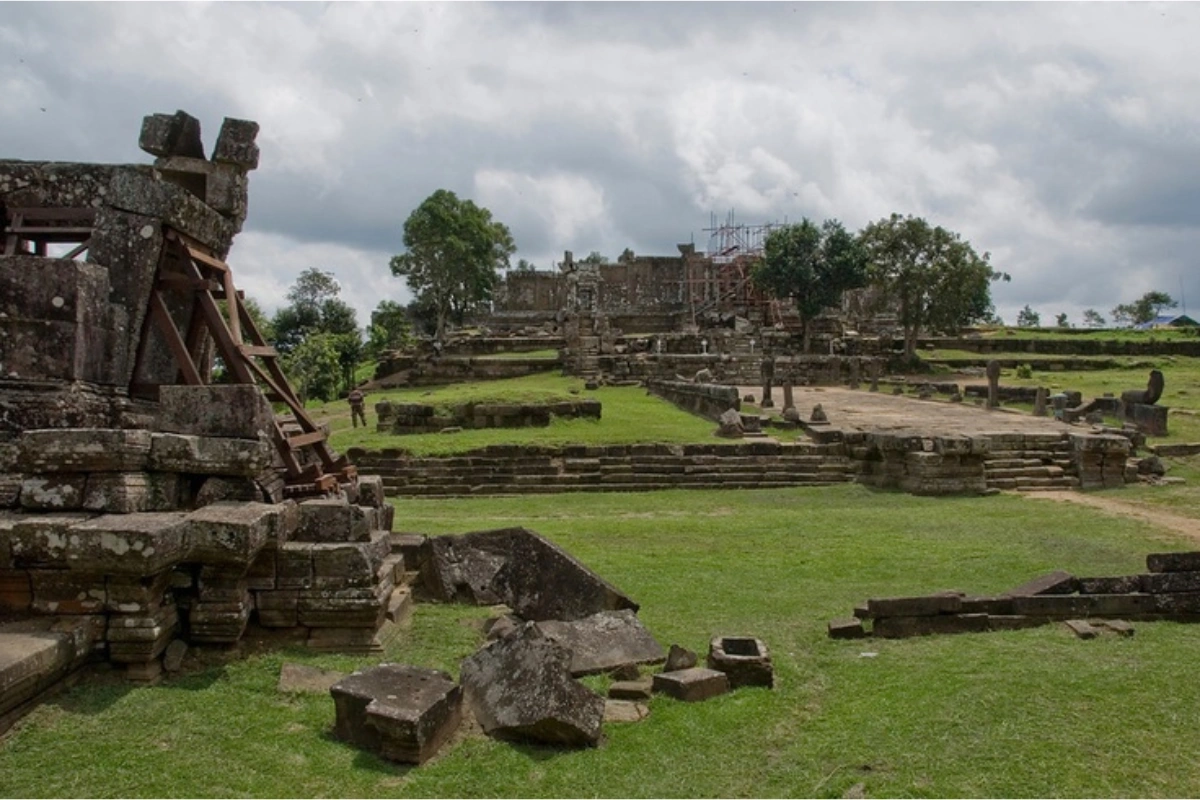
The history of Cambodia is not preserved in museums, but rather it is alive in the form of old temples, holy cities, and old traditions. Stone carvings, religious complexes, and historical monuments all over the landscape narrate the story of strong empires and cultures that remain. Travelers who aim at exploring the country meaningfully can use visiting Cambodia heritage sites to gain a profound attachment to the past and present of the country.
The blog will discuss the most important Cambodia heritage sites, and these are the temples of ancient times and historical places and sites that are culturally important and define the identity of the times and country. It points out the uniqueness of these destinations, how to visit them sustainably, and the reason as to why they continue to play a major role in the culture of Cambodia. Be it architecture, history, or spiritual heritage, this Cambodia heritage sites guide assists you in making a trip to the country based on knowledge and surface-level sightseeing.
We shall start with the traditions of the Cambodian heritage.
Angkor Heritage Sites as the Heart of Cambodia’s History
One cannot talk about Cambodia heritage sites without Angkor, which was the previous capital of the Khmer Empire. The Angkor heritage sites are one of the most significant archaeological terrains in Southeast Asia, with the level of engineering, worship of religions, and artistic skill. These temple complexes used to be the political, spiritual, and cultural hubs of an empire that had influenced the region for centuries.
The visit to Angkor offers an insight into the development of the city structure in ancient communities, the manner in which people maintained water resources, and how they expressed their faith. These locations continue to be one of the most frequented Cambodia tourism attraction sites for tourists who come from all over the world and wish to learn the extent of Khmer civilization. Angkor is a place to add to your traveling list that would be important to understand clearly about the Cambodia heritage sites.
Pro tip: Take a visit to big temples during early mornings so that people do not crowd around and the environment seems to be less noisy.
Angkor is a heritage of Cambodia that lives in the present-day cities and communities.
Historic Cities and Cambodia Landmarks Beyond Angkor
Even though Angkor takes global attention all over the world, there are numerous Cambodia heritage sites that lie beyond temple complexes. Preservation areas and ancient cities can give us knowledge about the history of colonization, trade routes, and its current evolution. These Cambodian landmarks portray levels of influence that took place in the history of the country.
A walk across historical districts gives one an insight into the architectural designs during the French times, places of worship, and recreational centers that remain operational by the locals. These places are important tourist attractions in Cambodia, as they enable the tourist to see the interaction between history and present life. A trip to such urban areas of heritage provides a contrast to the trip about the Cambodia heritage sites, with both older and recent stories.
Pro tip: Walking tours should be accompanied by the local guides to provide more historical background.
Heritage cannot be found in cities alone; it is also present in sacred traditions.
Religious and Spiritual Cambodia Heritage Sites
Religion has been the main focus of the Cambodians, and a large number of the Cambodia heritage sites are a representation of centuries-old spiritual worship. Since their roots originate in Hindu influences from when the Khmer Empire existed until Buddhism finally took control, religious structures depict the development in thought but indicate some connections.
Pro tip: When visiting operational religious places, dress decently and pay attention to the local traditions.
The historical context is needed in order to get a complete picture of these places.
Learning Through Cambodia History Tours
The guided Cambodia history tours are organized methods of exploring the Cambodia heritage sites in an in-depth and brief manner. Well-informed tour guides allow relating architectural details to historical events, political changes, and cultural values. Such tours are especially useful to those tourists who are not aware of the history of the region.
When taking guided tours, one would make Cambodia sightseeing more of a learning experience since the visitor learns to interpret carvings, layouts, and symbolism. There is also responsible tourism in such tours by observing preservation practices. This is because the guided experiences will make a visit to Cambodia’s heritage sites an informative, respectful, and meaningful experience.
The advantages of historical tours are
- Professional analysis of sites.
- The contextual interpretation of heritage.
- Favoring conservation activities.
Pro tip: Select small groups to get a more individualized clarification.
Minor destinations are also covered in heritage exploration.
Lesser-Known Cambodia Heritage Sites Worth Exploring
Other Cambodia heritage sites are not very well known, but they give more peaceful and much more rewarding experiences. They are known to be places with little traffic but high cultural and historical interest. By visiting them, one can get a more comprehensive perspective of the Cambodian heritage other than the classic sights.
The sites allow building a more balanced perception of the Cambodia tourist places in terms of highlighting the diversity in the region and local narratives. The tourists who incorporate the less famous destinations in their itineraries usually get more connected and see fewer people. These explorations support the diversity and abundance of the Cambodia heritage sites in the country.
Pro tip: Spend some time off the beaten path to prevent overload of the itinerary at popular places of interest.
Tradition is found, and, by careful planning, everything gets united.
Plan Your Cambodia Heritage Journey With Purpose
Traveling to Cambodia heritage sites does not only mean sightseeing; it is about understanding and looking back into the past, culture, and continuity. When traveling in a thoughtful way, it is a sure thing that travel provides preservation while having memorable and spiritual experiences.
Key takeaways:
- Balancing iconic and lesser-known heritage sites.
- Tour with historical advice.
- Sensitivity to culture and religion.
Pro tip: It is useful to plan routes beforehand in order to control the speed of travel and prevent fatigue.
Conclusion
Exploring mythological sites and monuments in Cambodia gives the tourists a very rich experience in terms of time, faith, and resilience. From temples and spiritual centers of ancient times to historical cities and silent landmarks, the heritage of Cambodia has a tale of cultural power and permanence. When the travelers visit these places in a conscious manner, they appreciate more of the living traditions and past of the country.
The booking of guided tours, historical walks, and curated experiences is easier with the help of reliable platforms such as Viator and does not affect preservation efforts and the local communities. Conclusively, Cambodia’s heritage sites are not merely places to view history but to learn it and apply what it means to the future through accountable traveling.
Revisit history, rediscover culture, and deepen your travel attitude with BlogsBuddy—wherein each return uncovers tales that continue to encourage.