
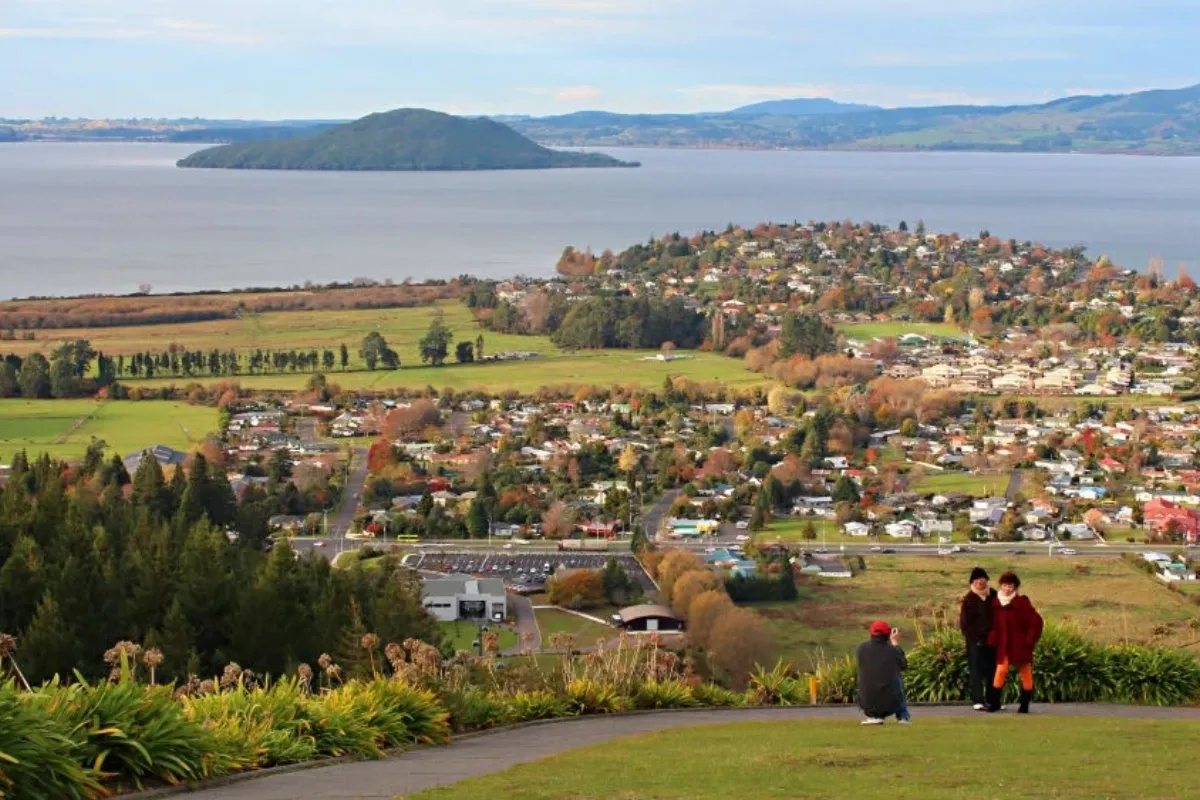
Before the landscapes catch your eye, the sulfur tang catches your nose. The air is filled with sulphur; it is weird yet somehow also very soothing, like nature telling you that you have entered a place of strength. Welcome to this site in case it is your first time. This guide to Rotorua is focused on the inquisitive minds, the travellers who are a bit nervous and everyone who ever wanted to watch the Earth breathing under their feet.
Rotorua does not make attempts in an unobtrusive way. It can be bubbling, steaming, hissing and even popping. For Rotorua first-time visitors, that may be overwhelming, in the best sense of the term. Take this guide to Rotorua as a local trying to get you in, telling you, “Begin here. Trust me.”
Exploring Rotorua’s Energy: A Thoughtful Guide to Rotorua
It’s located on the Pacific Ring of Fire, which makes the land a little jittery and almost as if it has had too much coffee. Rotorua geothermal attractions are not in the city, but they are not on the edge of the forest either; they are right before your very eyes being part of everyday living. Vapour is formed by the sideways roads. Parks bubble. There is a gurgling of mud pools talking secrets.
Any good guide to Rotorua will advise you not to hurry. Rotorua is not a place to check off boxes but to relax at a down-to-earth pace to pick up on the little, peculiar things. How warm it is when you have the shoes on. A hiss of steam pours in the middle of a conversation. It’s mesmerising.
Geothermal Parks You Can’t Skip
This guide to Rotorua has a list of must-see places (and it has one of those), Rotorua geothermal parks are at the top. The heart of attention is Te Puia, where you can find the most famous geyser, the Pohutu Geyser, gushing out its watery material in quite the dramatic way at any time, and without a moment’s notice. It is almost primal to behold, a feeling very akin to that of seeing something really ancient and world.
The other must-see destination would be Wai-O-Tapu, particularly when you are a fan of unrealistic views. It is memorable with neon-coloured pools, hot craters, and scenery that resembles the one in a movie straight out of a sci-fi film. It is not mentioned in every guide to Rotorua in vain.
Hot Springs: Rotorua’s Natural Reset Button
Let’s talk about relaxation. The last thing you want to do after all that geothermal drama is to sink into Rotorua hot springs and still receive a reward you had no idea that you deserved. The best-known is Polynesian Spa, which stands directly on the lake of Rotorua, though smaller locations have equally relaxing experiences.
Here is a clue which this guide to Rotorua has by heart: go in the evening. It is rather mystical when dipping in the mineral-rich waters, the cool air and steam surrounding you like a fog within a dream. It is not just soothing, but fundamentally grounding too.
Things to Do Beyond the Steam
Sure, geothermal marvels are the order of the day, but there is more. And in case you are wondering about things to do in Rotorua besides bubbling pools, then you are lucky. Whakarewarewa forest walks are magical to walk through with the giant redwoods that cast random shadows. It is one of those Rotorua nature attractions that comes up and catches you off guard.
Rotorua has mountain biking, ziplining and luging, which are favourites of adrenaline lovers. The city is surprisingly well balanced in serenity and thrill that can be explained by any contemporary guide to Rotorua. You are meditating in a hot spring one second, and the next one you are flying through trees and laughing hysterically.
Cultural Depth That Stays With You
Any intelligence guide to Rotorua would not pass over Māori culture. This is a place that is strongly tied to Maoi heritage, and it is not a performative relationship but a lived one. A trip to a cultural village, storytelling, and a hangi lunch put all that you have been seeing bubbling out of the ground into perspective.
It reminds us that Rotorua is not only about geothermal activity; it is about people who have known, loved and incorporated it into their being. In the case of Rotorua sightseeing, this cultural layer is equally important to any geyser.
Getting Around Without Stress
One of the practicable observations in this guide to Rotorua is that most attractions are within walking distance, although it is easier with a vehicle. With that said, guided tours may be a time- and brain-saving experience, in particular, when Rotorua is a first-time visitor who does not need to spend time on logistics.
A sensible Rotorua travel guide attitude comes in here – cluster attractions in one area, have extra time and do not overschedule. Rotorua is distracting, and to be fair, that is the point.
When to Visit (and Why It Matters)
Timing advice would be incomplete without this guide to Rotorua. The winter implies heated scenery and a lesser number of visitors, whereas summer is associated with the extended daytime and lake actions. No seasons are bad; they are just various moods.
Early mornings are good enough when you are interested in photography. It is more or less spiritual when steam rises with the sunrise over geothermal fields. Even seasoned travelers pause in silence when they see it.
Final Thoughts for First-Time Visitors
The greatest gift this guide to Rotorua can offer is an invitation to let Rotorua surprise you. Don’t revolt against the odour, the vapour, and the unreliability. Lean into it. Smile when your feet are hot on the sidewalks. Look a little longer than you are used to.
Rotorua isn’t polished. It is crass, touching, and somewhat queer – and that is the reason why it sticks. To have an easy and well-structured time and organise geothermal tours and experiences without a problem, most travellers prefer Viator to make the best of their time.
For more guidance on planning memorable trips and exploring new places, explore BlogsBuddy.