
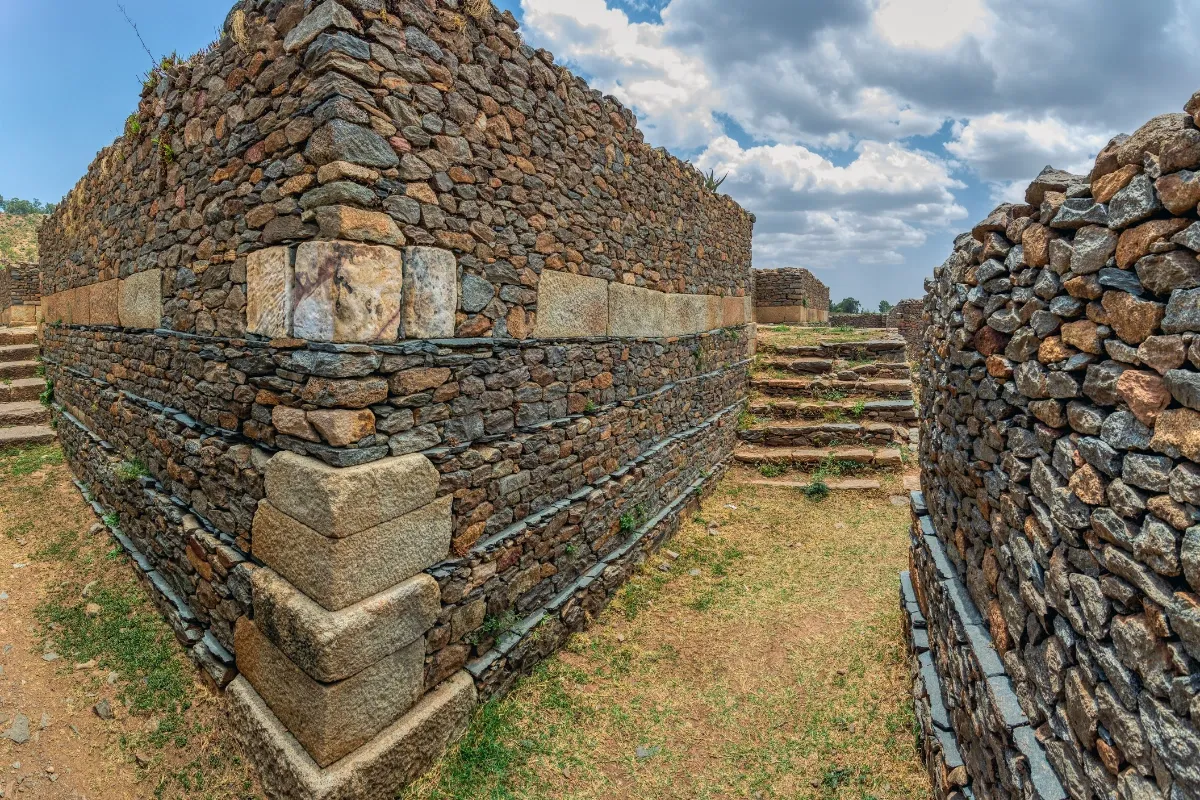
One can visit somewhere that stays with him or her. Ethiopia strongly belongs to the second category. Once you get on its highlands, there is something old that hums beneath your feet, a silent reminder that you are walking through layers of time that are created by Ethiopia ancient civilizations. This is not a place that you go and see, but one that you gradually absorb like the incense in a primeval old church.
Ethiopia does not scream about its history. Ethiopia ancient civilizations whisper it—between the walls of the rocks and the prayers and the cracks in the manuscripts and the gentle draining away of centuries. This is how it feels to be in living history, as long as you have ever wondered what it is.
Ethiopia Ancient Civilizations That You Are Must Visit
1. Lalibela: Where Faith and Stone Refuse to Age
We can begin with Lalibela, as, frankly speaking, there can be nothing similar. The churches here are not river-hewn out of the ground but merely sink into it. Sculpted out of volcanic rock in the 12th century, these buildings are a work of art in terms of devotion and resourcefulness, a direct inheritance of Ethiopia ancient civilizations.
The feeling of walking between the trenches between the churches is surreal, as if you have entered an underground city that is beneath the surface. White cotton-wrapped priests pass by, barefoot, chanting prayers as ancient as the oldest nations. It is not pretended spirituality, but day-to-day life that is based on Ethiopia historic culture, alive and mutely insubordinate to time.
2. Aksum: The Genesis of Myths
If Ethiopia were to have a heart, Aksum would have been her strongest pulse. Aksum holds an empire of its own and narrates the history of Ethiopia ancient civilizations in the form of great obelisks, royal tombs, and religious myths. Conventionally, this is the place where the Ark of the Covenant resides-under surveillance, unnoticed, and severely protected.
Being in the stele, you cannot but feel small. These monuments were not constructed to accommodate tourists or photo shoots. They were statements of authority, faith, and nationality, which are some of the most important aspects of Ethiopia cultural heritage, which continue to characterize the country to date.
3. Gondar’s Castles and Royal Whispers
And imagine castles there—real castles in Africa. Gondar does precisely that. This ex-imperial capital is often referred to as the Camelot of Africa since there are stone fortresses there, which are strange to be referred to as European but are definitely Ethiopian.
It sounds as if you are wandering into the Royal Enclosure where the whispers of royal intrigues, merriments, and agonies of empire languish. This complex blend of influences in the architecture says a lot about the Ethiopia heritage sites and how Ethiopia ancient civilizations appropriated the world without being assimilated.
4. Caves Churches and Sacred Churches
The wonders in Ethiopia are not all mighty or conspicuous. There are those that take time—and some boldness. Tigray has cliffside and cave churches, which hang on sheer rock faces, reachable by rope or minuscule ledges. These were meant to be isolated, meditative, and secure.
Within, there are some old frescoes with the biblical stories, in earthy reds and ochres. Beyond, there is a great silence that extends for miles. These concealed sanctuaries are pristine Ethiopia cultural sites that were molded by the monks who thought that faith was more powerful when the world was distant. Here once again, the Ethiopia ancient civilizations shows how intensive they were not only in terms of monuments but also attitude.
5. Harar: Living Cultural Mosaic.
Here you are at the eastern edge, where Ethiopia seems to find a new rhythm. Harar, with its sinuous alleys and sound-filled bazaars, is yet another special invitation to Ethiopia historic culture. This sacred Islamic city feels warm and immediate: surrounded by ancient walls, full of color, conversation, and everyday life unfolding in real-time.
Brightly painted walls frame hand-carved doors, each with a story etched into its grain. Sit in any tea shop long enough, and you will hear the history spoken casually, almost offhand. Ethiopia ancient civilizations were never sealed but did exchange ideas, welcomed influence, and grew into richly layered identities that continue to thrive today; this is what Harrar’s history encapsulates.
Why Ethiopia Ancient Civilizations Feels So Different
The point is that Ethiopia was not colonized as much as Africa was. That matters. It implies that traditions were not lost or rewritten; they were just perpetuated. The languages, rituals, calendars, and cuisines were preserved in a continuous way without being interrupted by the Ethiopia ancient civilizations.
This unbrokenness is what makes Ethiopia cultural heritage so uncouth and true to life. You do not go behind glass and see relics; you see history breathing. Churches still function. Pilgrims still walk for days. Celebrations continue to be based on antique calendars. It is all living marvelously, obstinately.
Walking Through Time, One Landmark at a Time
It may be the monolithic churches of Lalibela, the stele of Aksum, the castles of Gondar, or the living streets of Harar. Ethiopia landmarks are not only marvelous, they are incredibly personal. They request you to slow down, to listen, and to feel.
Each of them is linked to Ethiopia ancient civilizations and makes you remember that the country did not only witness history but also helped to shape it. And whenever you see that, then traveling becomes not about sightseeing; it begins to be more like understanding.
Conclusion: Let Ethiopia Ancient Civilizations Change You
Travelling in Ethiopia does not involve making boxes. It is the time of being stagnant so that the past can catch up. The country provides something that is difficult to find in other countries in terms of authenticity without performance through Ethiopia ancient civilizations, sacred architecture, and living traditions. When you are willing to venture into these tales with masterly advice and better involvement of the inner world, guided tours with Viator can assist you in revealing the immortal soul of Ethiopia without being in a hurry to encounter what is supposed to be experienced.
For more inspiration on global adventures, city secrets, and tours you’ll love, visit BlogsBuddy.